Event on September 9th 2025
IUCN in collaboration with the World Organisation for Animal Health (WOAH) and EcoHealth Alliance as well as the Wildlife Health Specialist Group have launched the ‘General Guidelines for Surveillance of Diseases, Pathogens and Toxic Agents in Free-ranging Wildlife’ in 2024.
These guidelines promote a One Health approach, strengthening the connections between human, animal, and environmental health. To understand the health threats posed by wildlife diseases, surveillance is essential. The guidelines specifically address wildlife health as other work often concentrates on human or livestock health surveillance. An important part of these surveillance efforts is the cross-sectoral collaboration: The integration of Indigenous peoples in the development and management, the integration of rangers, hunters, local communities and Indigenous peoples in the implementation and detection mechanisms, and investigation and interpretation work led by social scientists, ecologists, veterinarians, and other specialists.
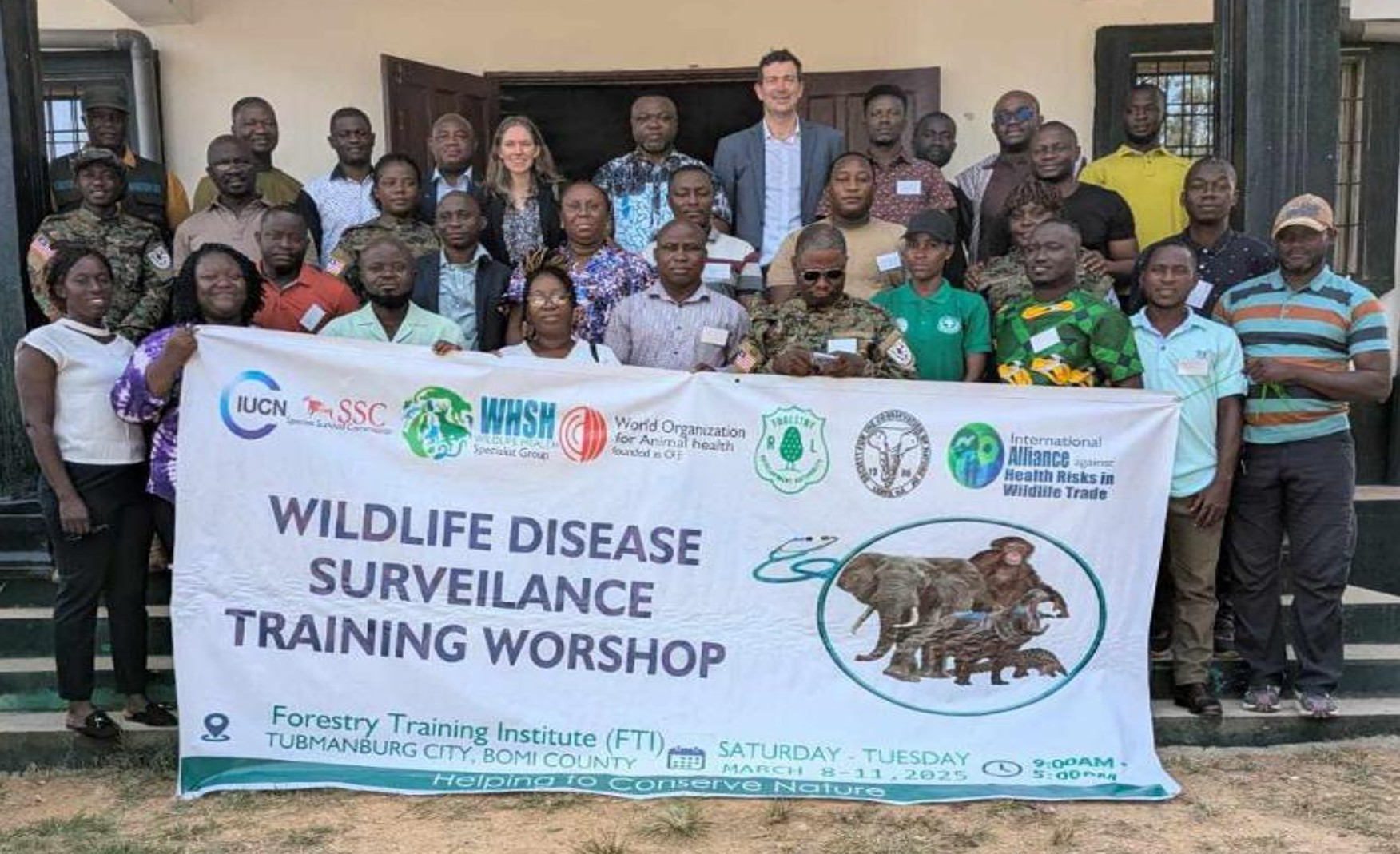
The application of these guidelines requires training and coordination between different stakeholders. To strengthen capacities for wildlife health surveillance and One Health collaboration in Liberia, the International Alliance supported IUCN to lead efforts on capacity building in the country, using the guidelines. Although trainings have been held in Liberia before regarding wild animal mortality and community awareness and ranger safety, some challenges remain. Through the IUCN-led workshop in March 2025, technical knowledge on wildlife disease surveillance was disseminated, surveillance programs were prioritised, reviewed, and collaborations were enhanced. As the One Health approach is not only about integrating animal, human, and environmental health but also about uniting various stakeholders, government representatives, academia, non-governmental organisations and international institutions were present. Looking ahead, other tools such as SMART for Health can also be utilized to support wildlife health surveillance and are part of the next planned steps to strengthen surveillance systems in Liberia.