Rooting Our Own Tomorrows (ROOTs)
This project examines how wildlife portrayals in Japanese media influence public desire to own exotic species, creating pathways that contribute to illegal trade, animal welfare risks, and biodiversity loss. It develops an evidence-based framework linking media imagery, perception, ownership intention, and demand dynamics to support ethical broadcasting standards.
Across three phases (2026–2027+), the study integrates large-scale media analysis, psychological measurement, and policy discourse evaluation. Phase I identifies taxonomic and thematic biases in national TV and online news and selects species for subsequent analysis. Phase II investigates how visual cues—such as anthropomorphism, human proximity, and indoor settings—shape ownership intention and produces an Ethical Risk Index to guide self-regulation by broadcasters. Phase III uses time-series data to analyze behavioral and policy impacts, evaluating how emotional framing in media influences public attitudes toward wildlife management.
The project ultimately proposes science-based, measurable principles for ethical wildlife representation in Japan, aiming to reduce public demand for wild species by improving media standards.
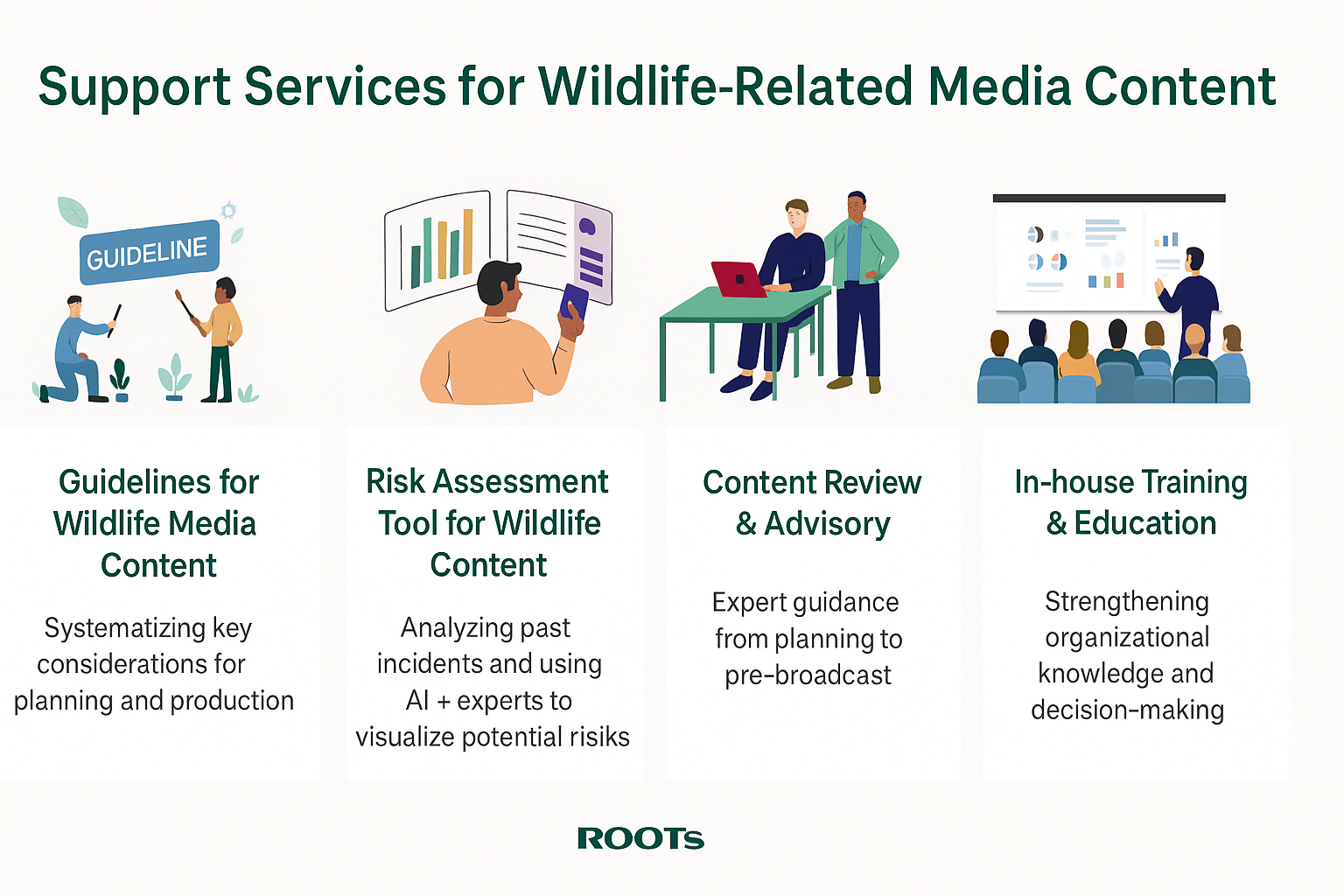
Additionally, we are developing media guidelines, the details of which are outlined below:
Guidelines for Wildlife-Related Media Content
ROOTs has developed a guideline to support media professionals in producing wildlife-related content that is ethical, welfare-conscious, and aligned with biodiversity conservation. Media strongly influence public perceptions of wildlife, yet inaccurate or sensational portrayals can cause unintended harm—affecting animals, habitats, and corporate credibility.
Designed for producers, writers, directors, editors, streaming platforms, advertisers, and sponsors, this guideline provides principles and practical steps to ensure responsible wildlife representation and to help teams identify and mitigate ethical, welfare, and reputational risks.
It explains why ethical attention is essential, outlines core concepts in animal welfare and conservation, highlights common risks across media formats, and offers lessons from past cases. It also provides guidance for children’s programming, key legal considerations, and ways to access expert support.
The practical section includes essential depiction checks, stage-specific checklists, and FAQs to support real-world application.
The guideline is available in Japanese on the ROOTs website and will be regularly updated as knowledge and media practices evolve.
Participants

Ayako Nagakura
Position: director Country: Japan Fields of action: Behavioral & Social Sciences, Biodiversity Conservation, Education, Research, Wildlife Trade Email: ayako.nagakura@roots-wildlife.org

Contacts
Ayako Nagakura
Position: Director of ROOTs/DVM Email: ayako.nagakura@roots-wildlife.org