A Transnational African Zoonosis Education campaign: Raising awareness for wildlife trade-linked health risks
Awareness campaigns aiming to reduce demand for wildlife and bushmeat are typically limited to conservation and legal aspects, while the dangers of zoonotic diseases are neglected.
This broad-based campaign aimed to change behaviour towards wildlife with a new approach. The goal was to reduce the risks of zoonotic spill overs in four relevant African countries being Cameroon, Liberia, Nigeria and Zambia, by creating public awareness on the ground for human health risks, linked to wildlife trade, and promoting the One-Health approach. We used and expanded the existing experience and structures of education programs at five rescue centres, under different conditions (such as consumed species range, rural vs. urban target consumer groups, and responsible government agencies). By using a wide range of communication tools, the project aimed to increase awareness about potential health risks from contact with wildlife, to discourage hunting, trade and wildlife consumption, to suggest alternatives, and motivate responsible government agencies to initiate necessary actions. Creating a consortium of rescue centres and learning from each other facilitated the exchange of knowledge, resulting in timely adjustments of education tools, and the development of new strategies, including activating influential stakeholders as multiplicators.
As a result, we developed optimised campaign tools in a modular system that can be used individually or as a package also in other countries and regions.
Main Outcomes:
- Scientific knowledge was translated into messages for daily life on the ground: individual communication strategies were developed and adapted to the national and local needs, targeting different age and population groups to achieve a wide reach of key messages.
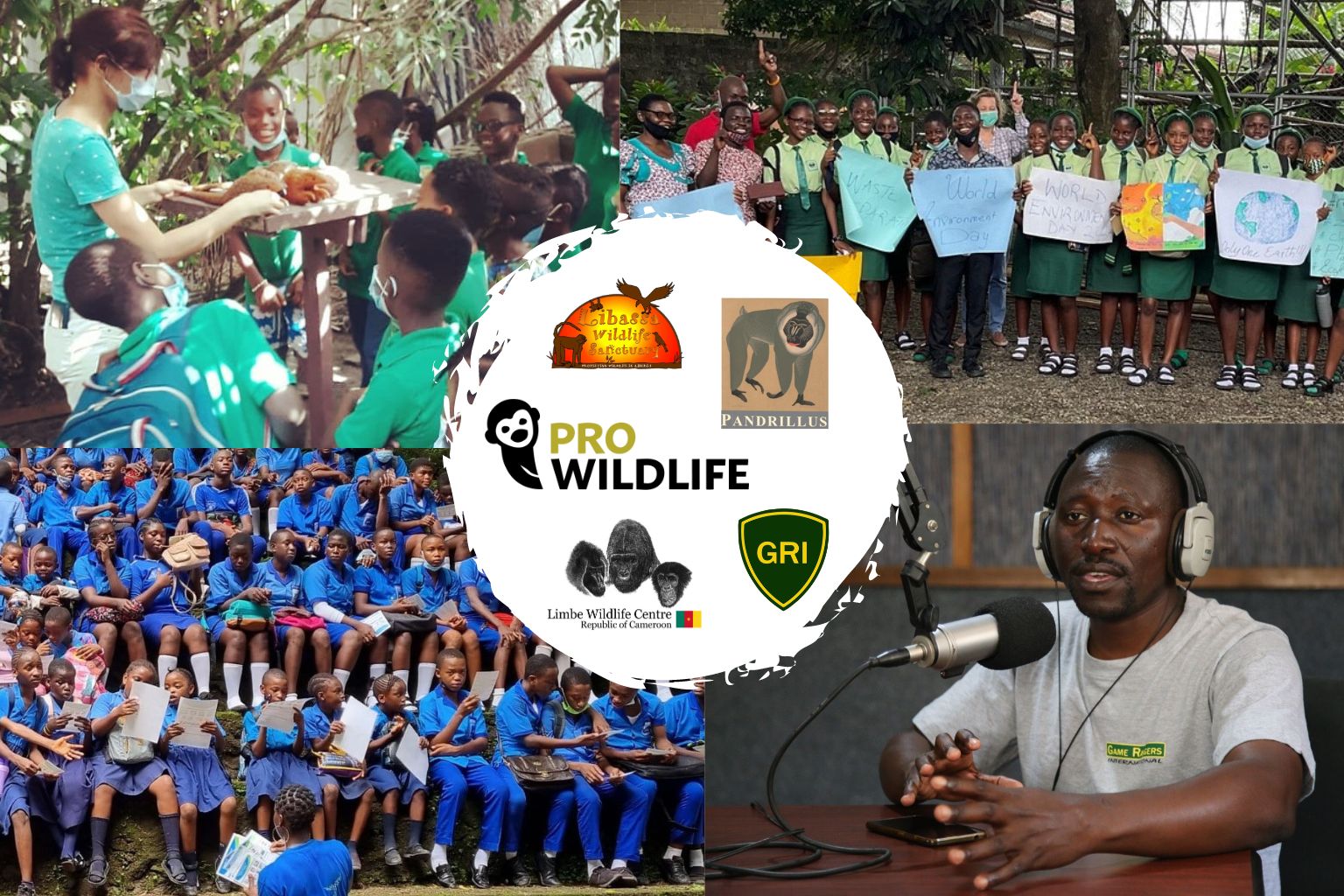
- More than 19,000 people were educated during guided tours in the rescue centres. Workshops for authorities and communities were organised.
- Around 5,400 children were reached through school visits. After the events, a strong increase in awareness of zoonoses and their importance for the participants was observed.
- With a football tournament, plays and dance groups, people of different ages and personal backgrounds were engaged. The educational components were integrated into these leisure activities and traditional leaders, and other multipliers were involved.
- Radio broadcasts and jingles were released in popular radio programs in Cameroon, Nigeria and Zambia and reached an estimated 7 million people. In Zambia, representatives of authorities were part of the radio shows, which helped to increase credibility and acceptance.
Conclusions and Lessons Learned
- Use bigger outlets like radio shows to reach more people
- Attract people through a combination of entertainment and education
- involve multiplicators (leaders, politicians, authorities, teachers etc.)
- link practical daily life issues with the zoonosis message to increase acceptance, initiate a dialogue and achieve behavioural change
different target populations require different approach and messaging
Products
Project Report:
Find more information and the overall learnings of the Alliance financed projects in the report “Learning to make Change Happen. – Global Lessons from 18 projects”
Find the event report here.
Participants

Sandra Altherr
Contacts
Pro Wildlife Germany
Email: mail@prowildlife.de