Health Risks Associated with Urban Wildmeat in Nairobi, Kenya and Lagos, Nigeria
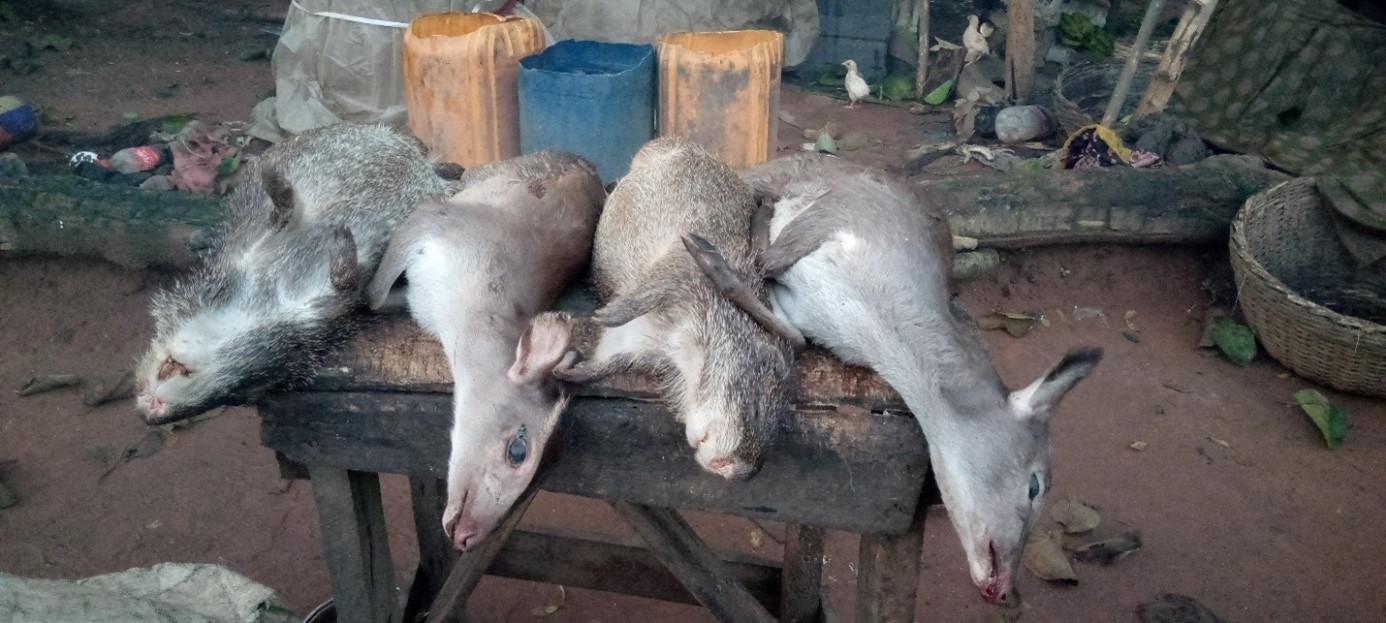
Wild meat is a vital source of animal protein for many communities around the world. However, trade in and consumptive use of wild animals poses several health risks to the human population, in addition to threatening global biodiversity. Since wild meat is mostly traded informally, and through complex food supply chains, understanding the potential impacts it may have on public health is notably difficult. That’s because there are no clear food safety guidelines such as those governing foods from crops or farm animals. Several studies have documented the existence of pathogens in wild meat, as well as disease outbreaks associated with handling and or consumption of wild animals or wild meat. However, little is known about risk of exposure of humans to these pathogens along the wild meat value chains (VC). Few studies have conducted risk assessment regarding wild meat handling and consumption, but such studies did not use a VC approach for risk analysis. Regardless, data from mapping wild meat VC, even though limited, has been used to identify conservation entry points in West, Central and East Africa. It is possible that risk analysis conducted through a VC approach can help identify critical control and entry points for diseases into the human population. Our project therefore intends to use a VC approach to estimate the risk of exposure to humans of the pathogens along the wild meat VC in Nairobi (Kenya) and Lagos (Nigeria). Data on the structure and characteristics of the wild meat VC in these cities continues to be vital in informing conservation policies. Most importantly, the findings from this study enhanced global understanding of existing food hazards of wild meat in urban centres, and probability of exposure to such hazards at the VC nodes. Such information is vital in identifying critical disease control points thus enhancing local, national and global capacity for disease outbreak prevention and control.
Main Results:
- Actors along the Lagos and Nairobi wild meat VC engage in health-risky practices that could lead to their exposure to zoonotic diseases.
- Conservation status assessments of wildlife in study areas are outdated and may not reflect their true current statuses.
- VC actors in both cities have limited knowledge and poor attitudes regarding the health risks that could result from wild meat handling. This potentially drives the observed practices.
- Available data suggests that wild meat extraction in both cities are hugely a male affair, while women are engaged in the distal nodes of the value chain.
Products:
- Two articles and two journals are under peer review
- The results were presented at multiple conferences
Find more information and the overall learnings of the Alliance financed projects in the report “Learning to make Change Happen.- Global Lessons from 18 projects”
Participants

Contacts
Samuel Akpan
Email: iykesamuel187@gmail.com
Phyllis Sherril
Email: phyllis.sherril@gmail.com
Ralph Buij
Email: ralph.buij@wur.nl
James Hassell
Email: HassellJM@si.edu