The Application of One Health Approach to Raise Wildlife Protection Awareness (OHAWE) in Indonesia
Indonesia is amongst the most biodiverse regions in the world. That comes in hand with a high diversity of wild animals living amongst the many different ecosystems. 14% of the total mammal species in the world find a home on the islands of Indonesia. High density of wild animals and the destruction of the ecosystems due to land-use change and overexploitation, force wild animals and humans to live closer and closer together. Furthermore, hunting and wildlife trade is a common source of income for the local communities. This rising interaction between the people and wildlife brings various health risks and environmental damage. The risks of spillover from wildlife trade come in the form of pathogens that can lead to zoonosis diseases. In Indonesia, people are dealing with issues such as insufficient public knowledge and awareness regarding wildlife trade risks and threats. Especially in rural areas, many people are not aware of the health risks connected to wildlife interaction. Thus, educating the community, starting from an early age, is essential. With this goal in mind, the project team raised awareness of wildlife protection for children using local values and customs.
The output of this project consists of two main products:
- Publication of ten trilingual storybooks and Podcasts (English, Indonesian, native language)
- Launch of Storytelling Events
The Publication of ten trilingual storybooks:
In phase one, illustrated storybooks in five native languages were created and distributed to elementary schools in five regions of Indonesia (Aceh, Yogyakarta, East java, Bali, Papua) differ around the country, each region chose an animal species with the risk of zoonotic diseases, that is relevant to their area: in Aceh they chose the Orangutan, in Yogyakarta they chose bats and in East Java they chose the East Javan Langur.
Due to the success in phase one, five more storybooks in in five more regions (South Kalimantan, South Sulawesi, Nusa Tenggara Timur, Riau, West Java) were developed. In this run, the project also entailed the creation of podcasts made by students at Udayana University in cooperation with wildlife experts.
The animals per region were chosen through group discussions about recent issues and cases with wildlife-human interactions, literature research of academic papers, articles and news as well as site visits and interviews with experts and locals.
The development of the stories was done with the focus on conveying scientific information as well as making the story interesting for the children. In the process experts of all fields could learn from each other and ensure an ideal product. The team managed to combine science, literacy, and art in accordance with the local environment, culture, values, beliefs and practices related to wildlife trade. An interdisciplinary approach to the creation of the books was ensured through the collaboration with native language experts, local design and illustration artists, wildlife veterinarians, and other relevant stakeholders.
Each book consists of 30-40 pages that provide three languages: Bahasa Indonesia, a native language and English. By carefully paying attention to the delivery of mother languages in the book, it can provide children with a better understanding of the issue and raise awareness around it. Each book was printed in 500 copies.
Storytelling is a popular feature of sharing knowledge between generations in local communities. It creates characters that children can connect to, making it easier for young children to understand the message.
The translation into the mother tongue of the different regions ensures easier comprehension of the topic through the elimination of language barriers. Providing three languages makes sure that the children can choose the language that they feel the most comfortable in. This makes the reading experience easier and more fun.
The books created are:
In a second project phase 5 more books were developed
The Launch of the Storytelling Events and the Distribution of Books
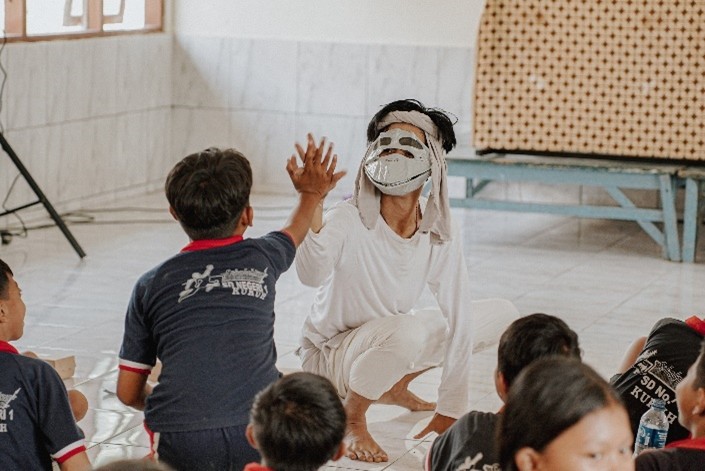
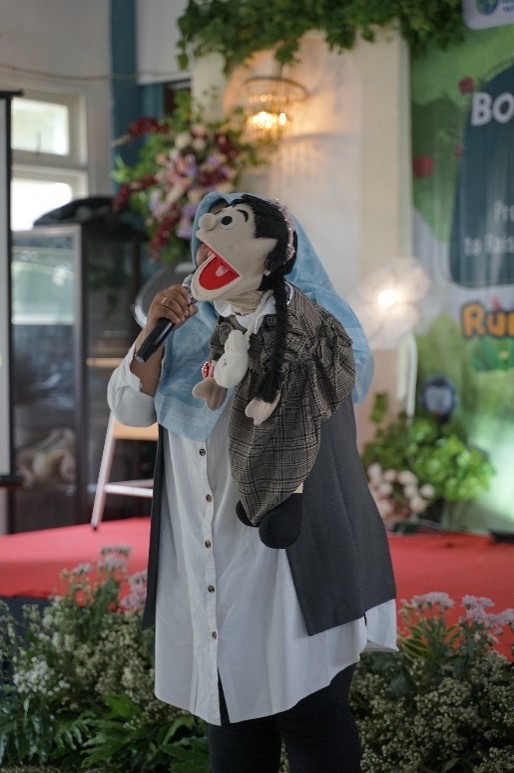
Storytelling and book launching events were held in all of the regions. In cooperation with local storytellers, theatrical performers and public health experts, each region created different events to present the storybooks according to their culture. Some performers utilised puppets and Wayang (traditional puppets), some accompanied the events with music or costumes. All events involved interactive elements to ensure the engagement of the audience and deepen the understanding of wildlife interactions and their risks. While the elementary students (age 9-12) were the main attendees, there were also parents, teachers, and representatives from the Education and Library offices present at the events.
Quizzes before and after the events showed an increased understanding of the risks of wildlife interaction after the Storytelling events. Parents affirmed this notion by reporting that their children were able to recall the story and its messages.
The books were then distributed through regional coordination with elementary schools, Education offices, Library and Archive offices, city libraries and other community services for the children and anyone interested. The books reached 2500 children in total through partnerships with more than 46 partners in all regions.
Conclusion:
Overall, this project shows a great success in addressing risks in wildlife interaction and sensitising people from a young age. It has successfully reached so many children and adults, and the books will continue to advocate for sustainable human-wildlife interaction. The project ensures the education of more people in more regions. Through application of One Health principles and the collaboration with so many stakeholders and experts from different backgrounds a holistic and culturally sensitive approach was ensured.
Find out more in the recording of our online event Voices from the Ground: Voices from the Ground: The Application of a One Health Approach to Raise Wildlife Protection Awareness (OHAWE) in Indonesia – International Alliance against Health Risks in Wildlife Trade
Find more information and the overall learnings of the Alliance financed projects in the report “Learning to make Change Happen.- Global Lessons from 18 projects”
Contacts
OHCC Secretariat
Email: ohcc@unud.ac.id