Film Screening of ‘Breaking Boundaries: The Science of Our Planet’

Wednesday, October 12th, 2022, at 17:30 CEST

online and at the GIZ offices, Reichpietschufer 20, 10785 Berlin.

The Alliance Secretariat is organizing a hybrid screening of the acclaimed documentary “Breaking Boundaries” on October 12th: high-level guests and GIZ board member Ms. Tanja Gönner will discuss essential consequences with Prof. Dr. Johan Rockström of the Potsdam Institute for Climate Impact Research (PIK). With this event we take to opportunity to learn about the safe operating space for humanity and discuss the environment-health-nexus at which the work of the International Alliance is embedded, with Johan Rockström.

At 17:45 CEST you may click on the following link to enter the Livestream

About the event

Following the film screening, Prof. Rockström will enter a discussion with you and invited guests. We are looking forward to exploring and debating possible consequences and recommendations to the German politics in general, and German development cooperation in particular. This open and frank discussion should bring to light opportunities but also the real challenges we are now facing considering this evidence. The event will be held in English with:

  • Prof. Johan Rockström, Co-Director, Potsdam Institute for Climate Impact Research (PIK), exploring and debating with
  • Prof. Dr. Dr. Sabine Gabrysch, Professor for Climate change and Health, Charité, and
  • Ms. Tanja Gönner, Chair, Management Board of the Deutsche Gesellschaft für Internationale Zusammenarbeit (GIZ) GmbH,
  • facilitated by Maike Voss, Director, Center for Planetary Health Policy (CPHP), and Managing Director, Allianz Klimawandel und Gesundheit (KLUG).

About the film

Breaking Boundaries featuring Sir David Attenborough and Professor Johan Rockström explores the science behind the impact humanity has had on Earth since the dawn of civilization, revealing an urgent truth about the health of our planet. The film details just how far we’ve pushed Earth beyond the boundaries that have kept our planet stable for millennia, and what steps need to be taken to turn things around. At the core of Breaking Boundaries lies a key message of action: stay innovative, cooperate, and make the next decade one that safeguards the future of our planet. The science is clear on what humanity needs to do. Only when we listen to these facts – and pay attention to the undeniable urgency – can we create a future where nature and people thrive.

World Health Summit 2022

We are happy to announce that the Alliance secretariat will be organizing Session 06 “The Cost of Inaction – the Importance of Pandemic Prevention at the Source” on October 16th at 14:00 CEST. The World Health Summit (WHS) is the unique international strategic forum for global health. Held annually in Berlin, it brings together stakeholders from politics, science, the private sector, and civil society from around the world to set the agenda for a healthier future. More information and online registration can be found here.

Session 06 – The Cost of Inaction – the Importance of Pandemic Prevention at the Source

The Need to Bolster Pandemic Prevention at the Source to Reduce Costs and Provide Co-Benefits to Climate and Biodiversity

Sunday, Oct. 16, 2022, CEST: 02:00 PM – 03:30 PM / UTC: 12:00 PM – 01:30 PM

Scientists calculate the cost of preventing further pandemics – via forest protection and improved wildlife trade regulation – over the next decade would amount to just 2% of the estimated financial damage caused by COVID-19. Such prevention strategies would also come with considerable co-benefits for climate and biodiversity. Research shows the proportion of pathogens crossing from one stage to the next, from pre-emergence to pandemic stage decreases as the costs for stopping those increases. In this inverse correlation: the earlier we prevent, the more cost-efficient it is.

Yet attention is currently focused on later-stage prevention, preparedness and response. According to WHO’s Cristina Romanelli, only 3% of current efforts to stop future pandemics goes to primary prevention (pre-spillover), while the remaining 97% is invested in secondary prevention and preparedness measures.

In the wake of immediate reactions to COVID-19 – most of which were taken under immense pressure to respond to and manage an ongoing crisis – many key actors, are now contemplating how to avoid and handle possible future pandemics more intelligently, efficiently and effectively. Considering this challenge, we ask: How can lessons learned from COVID-19 and primary prevention take a more prominent role in global responses to reduce the risk of future pandemics? What would such a policy path look like? And how might it incorporate regulations in line with WHO’s Manifesto (“Prescriptions for a healthy and green recovery from COVID-19”) that recognize the incredible opportunity for investments contributing to solving the triple, intersecting crises of health, climate and biodiversity?

Chairs:

Dr. Eckart von Hirschhausen

Physician, Science Journalist, Founder of Healthy Planet – Healthy People Foundation and World Health Summit Ambassador | Germany

Speakers:

Prof. Dr. Andrew Dobson

Princeton University | Department of Ecology & Evolutionary Biology | Professor | United States of America

Jochen Flasbarth

Federal Ministry for Economic Cooperation and Development (BMZ) | State Secretary | Germany

Dr. Catherine Machalaba

EcoHealth Alliance | Senior Policy Advisor and Senior Scientist | United States of America

Dr. María Neira

World Health Organization (WHO) | Department of Environment, Climate Change and Health | Director

The whole session was recorded and can be found here: WS 06 – The Cost of Inaction – The Importance of Pandemic Prevention at the Source – YouTube

This session is organized by the International Alliance against Health Risks in Wildlife Trade.

‘Voices from the Ground’ with Wildlife Research & Training Institute Kenya

Addressing wildlife meat trade and associated health risks in Kenya.

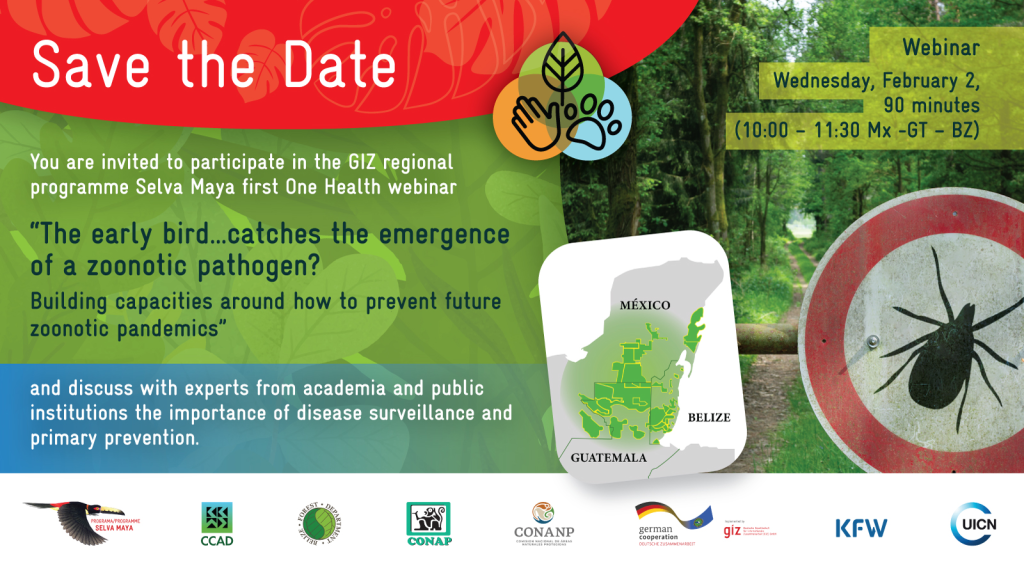
The Alliance’s online series Voices from the Ground format is exclusively for Alliance members and represents the diversity of local realities. Together we will create a safe space that is trustworthy to share experiences, solutions and challenges and shall foster the exchange within the Alliance community. This new format will give you the opportunity to talk about practical challenges and solutions on the ground, such as questions deriving from economic dependence from wildlife trade, cultural and religious values and traditions and Indigenous Peoples knowledge systems. An important topics could also be the problematical implementation of policies – so that all voices will be heard! 

Join our next “Voices from the Ground Session” with WRTI Kenya 

on Thursday, July 14th 2022 at 2:00pm CEST

About the event:

The Wildlife Research and Training Institute (WRTI) has been established with the understanding that wildlife research agenda needs to be more focused to provide reliable scientific information on emerging wildlife conservation and management challenges. The speakers from various backgrounds will share their insights and experiences about working along the wildlife meat and trade spectrum in Kenya and associated health risks.

The session will be moderated by Dr. Winnie Kiiru – chairperson of Wildlife Research and Training Institute (WRTI), founder of Conservation Kenya, chairperson of the Wildlife Research Institute in Naivasha.

The speakers will be:

  • Dr. Francis Gakuya – about health risks associated with bushmeat harvesting, trade and consumption, Principal Scientist and Head, Veterinary Science and Laboratories, WRTI.
  • Dr. Moses Otiende – about forensics, identification of wildlife meat and challenges encountered in Kenya, Senior Forensic Analyst and Head, Forensic and Genetics Laboratory, WRTI.
  • Mr. Isaac Maina  – about the indirect relationship between snaring and wildlife off-takes and harvesting in Kenya, African Network for Animal Welfare (ANAW).
  • Naomi Wanja Njihia – about the community perspective on bushmeat consumption and trade, Rangelands Officer at Taita Taveta Wildlife Conservancies Association.
  • Mr. Maurice Omondi – about the law enforcement against illegal bushmeat harvesting, consumption and trade, principal investigation officer with Kenya Wildlife Service

If you and your partners are also interested in contributing to a “Voices from the Ground Session”, please let us know.

We are delighted to host this session with WRTI Kenya and are enthusiastic to have a broad exchange within the Alliance community. 

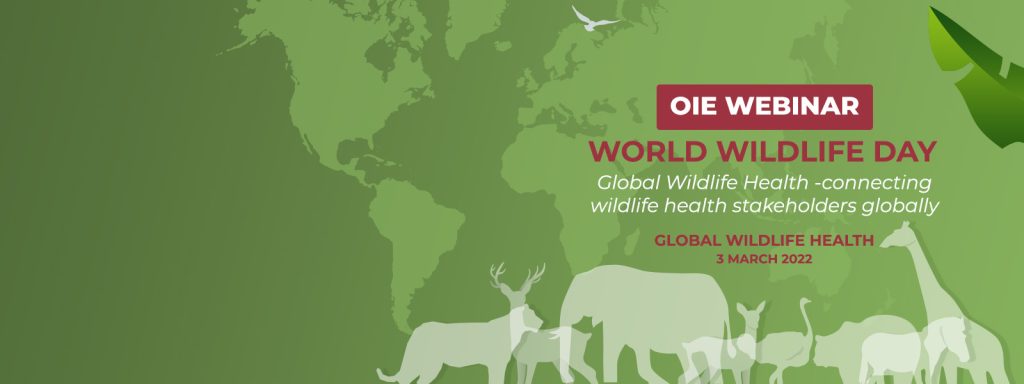
OIE Webinar “Global Wildlife Health”

Thursday, March 3rd 2022

World Wildlife Day aims to celebrate and raise awareness of the world’s wild animals and plants. In 2022, the OIE will organize a webinar across five regions and in twelve different time zones, connecting wildlife health stakeholders globally. The webinar will be held in two sessions—eastern hemisphere and western hemisphere—and the three official OIE languages (English, French and Spanish).

The OIE is addressing challenges involving wildlife health through implementation of the OIE Wildlife Health Framework. They look to the global community to protect wildlife health to achieve One Health. Towards this goal, the OIE Regional Representation in Asia and the Pacific, in association with the OIE Sub-Regional Representation for Eastern Africa and the OIE Regional Representation for the Americas, are organizing a webinar on “Global wildlife health” on World Wildlife Day in 2022.

OIE invites you to join the event, which will take place on Zoom® with livestreaming on YouTube®. Active participation from the live audience is encouraged.

Thursday 3 March 2022

  • Session 1 (in English and French)
    at 2am Buenos Aires / 6am Paris / 8am Nairobi / 2pm Tokyo  
  • Session 2 (in English, French and Spanish)
    at 11am Buenos Aires / 3pm Paris / 5pm Nairobi / 11pm Tokyo 
Wildlife day

Participation

The event is open for participants globally. The target audience will be multi-sectoral participants with an interest in wildlife health. OIE particularly invites university students and young professionals to join the webinar. 

Agenda

Welcome            Dr Lesa Thompson, OIE Regional Representation for Asia and the Pacific, Tokyo

Opening remarks             Special guest speaker

Spotlight on the World Organisation for Animal Health (OIE)        [Chair: Lesa Thompson]

  • Current and future OIE activities on wildlife
    Dr Keith Hamilton, Preparedness and Resilience Department, OIE headquarters, Paris
  • Global situation of wildlife disease surveillance
    Dr Mariana Delgado, Preparedness and Resilience Department, OIE headquarters, Paris
  • Early detection systems for wildlife
    Dr Yacinthe Guigma, EBO-SURSY, OIE Regional Representation for Africa, Bamako
  • Interactive session          Mentimeter® quiz & participant opinions

Wildlife health globe-trotting      [Chair: Patrick Bastiaensen]

  • Session introduction
    Dr Patrick Bastiaensen, OIE Sub-Regional Representation for Eastern Africa, Nairobi
  • Asia and the Pacific
    Dr Hirofumi Kugita, OIE Regional Representative for Asia and the Pacific, Tokyo
  • African swine fever in wild pigs in Asia and the Pacific
    Dr Brendan Cowled, Executive Consultant and Director, AusVet, Canberra
  • Middle East
    Dr Ghazi Yehia, OIE Regional Representative for the Middle East, Beirut
  • Peste des petits ruminants (PPR) in wildlife in the Middle East
    Dr Ahmad Al-Majali, Jordan University of Science and Technology, Al Ramtha, ‎Irbid‎
  • Europe
    Dr Budimir Plavsic, OIE Regional Representative for Europe, Moscow
  • Rabies in wildlife in Europe
    Dr. Maxim Sîrbu, National Food Safety Agency, Republic of Moldova, Chișinău

Break

  • Africa
    Dr Karim Tounkara, OIE Regional Representative for Africa, Bamako
  • Anthrax in wildlife in Africa
    Dr Augusta Kivunyza, Kitui County Veterinary Services, Kenya Zoonotic Diseases Unit, Nairobi
  • Americas
    Dr Luis Barcos, OIE Regional Representative for the Americas, Buenos Aires
  • White nose syndrome in the Americas
    Dr Jordi Segers, Scientific Coordinator Bats, Canadian Wildlife Health Cooperative, Halifax

Ecosystem health and biodiversity     [Chair: Maria-Eugenia Chimenti]

  • Ecosystem health for biodiversity
    Dr Marcela Uhart, University of California Davis, OIE Working Group for Wildlife, Davis
  • Interactive session          Mentimeter® participant opinions & questions for speakers

Closing remarks               Dr Monique Eloit, OIE Director General, OIE headquarters, Paris

Close     Dr Maria-Eugenia Chimenti, OIE Regional Representation for the Americas, Buenos Aires

Photo: sutirta budiman

WBGU Webinar Dec 14th 2021

14.12.2021 at 16:00 – 17:30 CET

The WBGU recently published a discussion paper “Planetary Health: What we need to talk about”. The aim of this four-pager is to stimulate a discussion on the role of health in the global transformation towards sustainability. The insights gained from this dialogue process are incorporated into the Advisory Board’s discussions on its new flagship report (forthcoming early 2023). The public presentation and discussion of the new paper on December 14 is part of this dialogue process (the presentation of the paper in German will follow in early February 2022). 

Programme

Impulse statement

Sabine Gabrysch, WBGU, Professor for Climate Change and Health at Charité – Universitätsmedizin Berlin and Potsdam Institute for Climate Impact Research (PIK) 

Panel discussants

  • Howard Frumkin, Professor Emeritus of Environmental and Occupational Health Sciences at the University of Washington
  • Cristina Romanelli, Programme Officer, Biodiversity, Climate Change and Health, WHO, Montreal
  • Ivar A. Baste, Special Advisor, Norwegian Environment Agency, report lead Making Peace with Nature (UNEP), Past IPBES Bureau 
  • Sabine Gabrysch, WBGU, Charité – Universitätsmedizin Berlin and PIK

Moderator: Maike Voss, German Alliance for Climate Change and Health (KLUG)  

What it is about

The COVID-19 pandemic has shown us how vulnerable we are and how closely connected we are with Nature. Health cannot be taken for granted. Do we take the prerequisites for healthy living seriously enough? Or are we, as a civilization, systematically jeopardizing our health?

Healthy people as part of a healthy planet Earth

In recent decades, as prosperity has increased, human health has improved worldwide; yet not everyone has benefited. In poorer population groups, infectious diseases and maternal and child mortality still cause a great deal of avoidable suffering. Increasingly, however, the gains in prosperity are themselves having a negative impact on health: on the one hand as ‘too much of a good thing’ through the overconsumption of food and the displacement of physical activity from everyday life, on the other as harmful side effects in the form of air pollution and environmental toxins. As a result, lifestyle diseases such as overweight, diabetes, cardiovascular and respiratory diseases are on the rise worldwide. Last but not least, our resource-intensive way of life, with its immense emissions of greenhouse gases, the destruction of natural habitats and increasing pollution of land and sea, has led to a planetary crisis. It threatens the natural life-support systems on Earth and thus the health of all people. Heat waves, disastrous floods and pandemics drastically demonstrate to us that our society is dependent on functioning ecosystems and a stable climate. The planetary crisis could furthermore threaten the cohesion of our societies and overburden healthcare systems. But the crisis also gives us an opportunity to rethink our idea of prosperity and progress, to break habits and make our societies fairer, more sustainable and healthier. Because the increasing environmental and health problems often have common roots, synergies can be found in approaches to solving them. We are at a crossroads. Society, business and politics must assume responsibility and initiate a comprehensive transformation that leads to healthy human life on a healthy planet.

Ten key issues to debate

WBGU  identified ten key issues in dealing with planetary health and developed a couple of questions for each issue (see discussion paper). These questions are intended to stimulate a debate on this topic and to encourage people to get involved in these developments. In the course of its current work on a report dealing with the relationship between health and global sustainability, the WBGU will organize various events at which the above questions can be discussed.

WBGU Planetary Health


Planetary Health: What we need to talk about

Video and Discussion paper

Photo: NASA

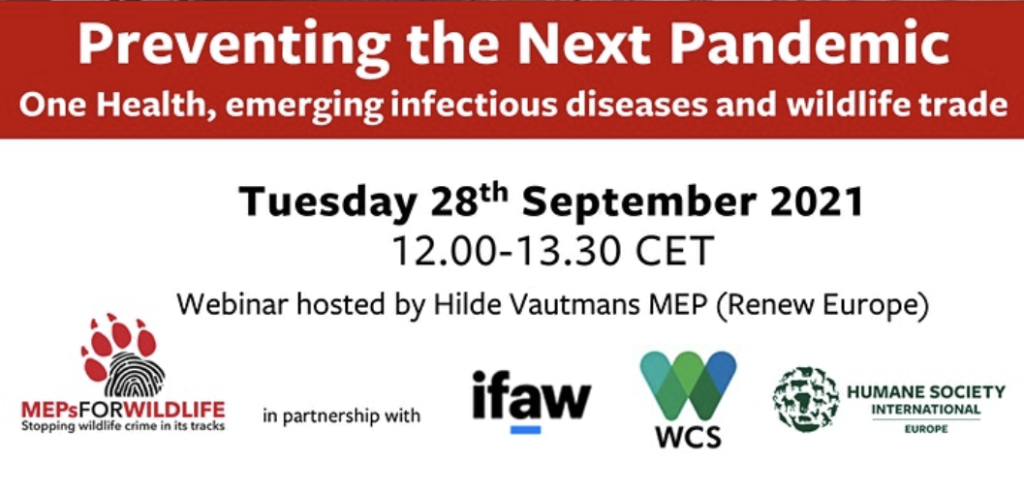
Preventing the Next Pandemic: One Health, emerging infectious diseases and wildlife trade

Tuesday 28th September 12:00 – 13:30 CET Webinar hosted by MEP

About this Event

Wildlife around the globe is under intense pressure from human activity and over-exploitation.

Illegal and unsustainable wildlife trade, poor governance, and corruption have significant negative impacts on ecosystems (e.g. deforestation, forest degradation) and the loss of multiple wild species, affecting the integrity of whole ecosystems, contributing to climate change, and negatively impacting local livelihoods, economic development, and security.

The current COVID-19 pandemic and other disease outbreaks of zoonotic origin such as SARS and Ebola clearly demonstrate the critical need to apply a truly trans-sectoral One Health approach, as a matter of urgency. Efforts must be focused on preventing pandemics of zoonotic origin at their source – in other words, stopping them at the point of spillover of pathogens from animals to humans, well before they can become local outbreaks, epidemics, or global pandemics.

This webinar – organised by the MEPs for Wildlife in partnership with the Wildlife Conservation Society (WCS), Humane Society International/Europe (HSI) and the International Fund for Animal Welfare (IFAW) – will discuss the on-the-ground impact of markets for live wildlife, particularly for human consumption, and associated wildlife trade (either from the wild or breeding facilities), the links to biodiversity, climate, security, and health and how to address these threats through an integrated One Health approach.

Programme

Welcome remarks

Hilde Vautmans, MEP, Chair of MEPs for Wildlife group

Short presentation

Prof. Dr. Chris Walzer, Executive Director, Health Program, Wildlife Conservation Society (WCS)

Moderated panel discussion

• Jorge Rodriguez Romero, Deputy Head of Unit, Multilateral Environmental Cooperation, DG Environment

• Dr. Bernard Van Goethem, Director, Crisis preparedness in food, animals and plants, DG SANTE

. Dr. Anne-Lise Chaber, One Health expert, School of Animal and Veterinary Science, University of Adelaide

• Cristina Romanelli, Programme Officer for Biodiversity, Climate Change and Health, World Health Organization (WHO)

Moderator

Dr. Joanna Swabe, Senior Director of Public Affairs, Humane Society International – Europe

Concluding remarks

Catherine Bearder, former MEP and founding Chair of MEPs for Wildlife group

Official Launch of the International Alliance against Health Risks in Wildlife Trade


at the IUCN WCC Marseille, Room: H9 – B 11, Press Conference Room

Join us onsite or virtually!

Identifying and reducing human health risks from wildlife trade needs an internationally coordinated and effective approach. To this end, the German Government is officially launching the International Alliance against Health Risks in Wildlife Trade as an inclusive and interdisciplinary platform, with the participation of already some 80 national and international political and civil society organizations, incl. indigenous communities, as well as scientific institutions.

The Alliance will translate the commitment and political will of its members by pooling interdisciplinary information and know-how. It will catalyze joint action by stakeholders from the fields of nature conservation, human and animal health as well as development cooperation and social sciences.

The Alliance focuses on human-wildlife interfaces and associated health risks, specifically in wildlife trade, and the emergence and spread of zoonotic pathogens from wildlife.

We, the Alliance and its members,

  • respect cultural identity, traditional knowledge and practices as well as subsistence use of wildlife,
  • aim to substantially reduce the risks of zoonotic spillovers from wildlife,
  • will enhance international and national awareness, knowledge, policies and action to narrow the gap between science and implementation,
  • contribute to reducing harmful wildlife exploitation.

For further information or registering for the Online Pass, please click here.