The Application of One Health Approach to Raise Wildlife Protection Awareness (OHAWE) in Indonesia

Indonesia is amongst the most biodiverse regions in the world. That comes in hand with a high diversity of wild animals living amongst the many different ecosystems. 14% of the total mammal species in the world find a home on the islands of Indonesia. High density of wild animals and the destruction of the ecosystems due to land-use change and overexploitation, force wild animals and humans to live closer and closer together. Furthermore, hunting and wildlife trade is a common source of income for the local communities. This rising interaction between the people and wildlife brings various health risks and environmental damage. The risks of spillover from wildlife trade come in the form of pathogens that can lead to zoonosis diseases. In Indonesia, people are dealing with issues such as insufficient public knowledge and awareness regarding wildlife trade risks and threats. Especially in rural areas, many people are not aware of the health risks connected to wildlife interaction. Thus, educating the community, starting from an early age, is essential. With this goal in mind, the project team raised awareness of wildlife protection for children using local values and customs. 

The output of this project consists of two main products:  

  • Publication of ten trilingual storybooks and Podcasts (English, Indonesian, native language)  
  • Launch of Storytelling Events  

The Publication of ten trilingual storybooks:  

In phase one, illustrated storybooks in five native languages were created and distributed to elementary schools in five regions of Indonesia (Aceh, Yogyakarta, East java, Bali, Papua) differ around the country, each region chose an animal species with the risk of zoonotic diseases, that is relevant to their area: in Aceh they chose the Orangutan, in Yogyakarta they chose bats and in East Java they chose the East Javan Langur. 

Due to the success in phase one, five more storybooks in in five more regions (South Kalimantan, South Sulawesi, Nusa Tenggara Timur, Riau, West Java) were developed. In this run, the project also entailed the creation of podcasts made by students at Udayana University in cooperation with wildlife experts. 

The animals per region were chosen through group discussions about recent issues and cases with wildlife-human interactions, literature research of academic papers, articles and news as well as site visits and interviews with experts and locals.  

The development of the stories was done with the focus on conveying scientific information as well as making the story interesting for the children. In the process experts of all fields could learn from each other and ensure an ideal product. The team managed to combine science, literacy, and art in accordance with the local environment, culture, values, beliefs and practices related to wildlife trade. An interdisciplinary approach to the creation of the books was ensured through the collaboration with native language experts, local design and illustration artists, wildlife veterinarians, and other relevant stakeholders. 

Each book consists of 30-40 pages that provide three languages: Bahasa Indonesia, a native language and English. By carefully paying attention to the delivery of mother languages in the book, it can provide children with a better understanding of the issue and raise awareness around it. Each book was printed in 500 copies. 

Storytelling is a popular feature of sharing knowledge between generations in local communities. It creates characters that children can connect to, making it easier for young children to understand the message.  

The translation into the mother tongue of the different regions ensures easier comprehension of the topic through the elimination of language barriers. Providing three languages makes sure that the children can choose the language that they feel the most comfortable in. This makes the reading experience easier and more fun. 

The books created are:  

In a second project phase 5 more books were developed

The Launch of the Storytelling Events and the Distribution of Books 

Storytelling and book launching events were held in all of the regions. In cooperation with local storytellers, theatrical performers and public health experts, each region created different events to present the storybooks according to their culture. Some performers utilised puppets and Wayang (traditional puppets), some accompanied the events with music or costumes. All events involved interactive elements to ensure the engagement of the audience and deepen the understanding of wildlife interactions and their risks. While the elementary students (age 9-12) were the main attendees, there were also parents, teachers, and representatives from the Education and Library offices present at the events.  
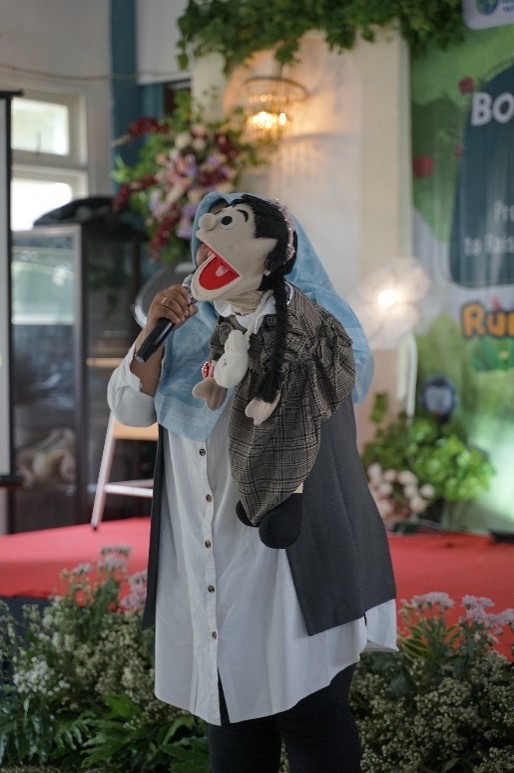
Quizzes before and after the events showed an increased understanding of the risks of wildlife interaction after the Storytelling events. Parents affirmed this notion by reporting that their children were able to recall the story and its messages.  

The books were then distributed through regional coordination with elementary schools, Education offices, Library and Archive offices, city libraries and other community services for the children and anyone interested. The books reached 2500 children in total through partnerships with more than 46 partners in all regions.  

Conclusion:  

Overall, this project shows a great success in addressing risks in wildlife interaction and sensitising people from a young age. It has successfully reached so many children and adults, and the books will continue to advocate for sustainable human-wildlife interaction. The project ensures the education of more people in more regions. Through application of One Health principles and the collaboration with so many stakeholders and experts from different backgrounds a holistic and culturally sensitive approach was ensured.  

Find out more in the recording of our online event Voices from the Ground: Voices from the Ground: The Application of a One Health Approach to Raise Wildlife Protection Awareness (OHAWE) in Indonesia – International Alliance against Health Risks in Wildlife Trade 

Find more information and the overall learnings of the Alliance financed projects in the report “Learning to make Change Happen.- Global Lessons from 18 projects”  
Health Monitoring of Animals Subject to Illegal Trafficking from the One Health Perspective

The realities of illegal wildlife trade, the changes in ecosystem dynamics, and the closeness of human population to wild areas, are events that could potentially trigger the appearance of diseases through zoonosis. These elements joined with the fact that there is significant lack of knowledge regarding the health of wildlife in northern Guatemala, highlighted the need to train personnel, equip an entity dedicated to the health of wild animals and create a methodology for obtaining viable samples for correct long-term storage, safeguarding irreplaceable biological information, and facilitating present and future research. Improving the chances of early detection of pathogens and the future conservation of the integral health of the wild fauna of the Maya Biosphere Reserve.  

The main objective of this project was to strengthen the regional knowledge on One Health issues, through the generation of a baseline of information on pathogens in wild animals, producing a bank of properly managed and preserved samples, and training the staff of institutions related to this work and topic. Project partner was the Guatemalan NGO ARCAS, that is among other engagements running a rescue centre in Petén/ Guatemala.  

Main outcome: 

  • Screening of samples from 714 different animals including primates, birds and reptiles identifying VEEV (Venezuelan Equine Encephalitis Virus), Patois virus, and hepacivirus. 
  • Training of rangers to report wildlife accidents or deaths in the Selva Maya to ARCAS 
  • Equipped an entity dedicated to the health of wild animals and create a methodology for obtaining viable samples for correct long-term storage, safeguarding irreplaceable biological information, and facilitating present and future research. 

Find more information and the overall learnings of the Alliance financed projects in the report “Learning to make Change Happen.- Global Lessons from 18 projects” 
Changing Dynamics and Health Risks along the Illegal Wildlife Trade Supply Chain from Myanmar to China and Thailand

The project aimed to investigate changing dynamics and health risks at multiple levels along the wildlife trade chain in Myanmar. In particular, the project sought to identify pathogens circulating in wildlife, including prey, predators, and arthropods as disease vectors of traded or locally consumed species. As part of a One Health approach, livestock, other domestic animals, and humans were also studied to determine if, where, and how such pathogens cross species boundaries along the wildlife trade chain. These investigations were embedded within a contextual socio-cultural and socio-economic study of actors who were involved along the entire wildlife contact chain in the study areas. Training was provided with a focus on participatory research techniques that are adapted to conflict and gender dynamics. 

Find more information and the overall learnings of the Alliance financed projects in the report “Learning to make Change Happen.- Global Lessons from 18 projects” 
Preventing the next pandemic: human and wildlife health monitoring and formulation of best practice guidelines and inclusion of health indicators in development planning

The COVID-19 pandemic has clearly demonstrated the interconnected nature of human, animal and environmental health. The wide-ranging effects of the SARS-CoV-2 virus have shown how zoonotic spillover events can have profound impacts on economies, social orders and global public health.
The project has a field component and looks at the direct contact between humans and wildlife, often connected to activities such as consumption of wild meat, as they often act as key drivers for disease emergence. Even if these activities happen on a local scale, on today’s interconnected planet, effects can quickly spread and have global impact. The project will feed information from human and wildlife health monitoring into the formulation of best practice guidelines and explore options to include health indicators in development planning.
This session will focus on the policy side and discuss how traditionally environmental and social impact assessments only look at the more proximate risks such as oil spills, toxic waste, pollution, but not at more complex and interconnected issues such as the links between environmental, economic and social transformation – often associated with large scale development projects – and disease.

A Buddhist Wildlife Trade Demand Reduction Initiative In Southeast Asia

Project period: 15.Dec. 2021 – 14. March. 2025

Southeast Asia is a biodiversity hotspot and a major hub for national and international wildlife trade – both legal and illegal. The region plays a key role as an end-market as well as onward trafficking in the illegal trafficking of high-value endangered species products, including elephant ivory and rhino horn. Southeast Asian markets have also been identified as a hotspot for the development of new zoonotic disease.

This initiative comprises targeted public awareness and demand reduction campaigns in Vietnam, Bhutan and Mongolia that draw on the fundamental Buddhist principles of compassion towards all life, universal responsibility, and interdependence. The project enjoys the support of the International Buddhist Confederation (IBC), the world’s largest Buddhist umbrella body, and the Buddhist leaders of the three project countries. By promoting conscious compassionate and sustainable lifestyle choices, based on Buddha’s teaching, the initiative aims to make a tangible contribution towards mitigating zoonotic disease spread and spill over risks, sustainability, biodiversity conservation, livelihood protection and peace. Collaborations with partners from faith-based communities have great potential to reach and positively influence the behaviour of wildlife consumers and traders.

General Outcomes:

  • 117 educational workshops and teachings were held in monasteries, schools, and relevant governmental and non-governmental organisations in all seven project locations in Mongolia, Bhutan and Vietnam, directly reaching close to 74 000 people.
  • A universal “Buddha Nature” logo was adopted in all locations to create a recognisable and relatable brand. Adding to that each country created an individual slogan.
  • The project reached an audience of more than 2.8 million people through social media, TV, public displays and other platforms.
  • Films, children’s books and many other educational tools were developed.
  • Monastic leaders in the three project countries have pledged to integrate the project concept into their messaging beyond the end of the project. In addition, a One Health roadmap for effective Buddhist demand reduction initiatives was created that is transferable to other faiths.

Further links:

Buddhist Wildlife introduction in Bhutan: Buddhist Wildlife Trade Demand Reduction Initiative in Southeast Asia – Launch

Barbara Maas Talk at Bhutan launch event: Talk 1: Dr. Barbara Mass – Buddhist Wildlife Trade Demand Reduction Initiative

Mr. Kinga Norbu: status of illegal wildlife trade and poaching in Bhutan: https://www.youtube.com/watch?v=fSRFC3LwVKA

How Myth and Superstition are Encouraging Wildlife Trade and Poaching | Dr. Karma Phuntsho: Talk 3: How Myth and Superstition are Encouraging Wildlife Trade and Poaching | Dr. Karma Phuntsho

Find more information and the overall learnings of the Alliance financed projects in the report “Learning to make Change Happen.- Global Lessons from 18 projects

Mitigating zoonotic disease emergence risk in wildlife trade in Southeast Asia


Southeast Asia, home to diverse mammals and birds, faces rising zoonotic risks due to population growth, deforestation, and wildlife trade. Close human-wildlife interactions, often through trade for food and traditional medicine, increase the likelihood of disease spillovers. The organisation EcoHealth Alliance, implemented the project “Mitigating Zoonotic Disease Emergence Risk in Wildlife Trade in Southeast Asia” across Thailand and Vietnam, in collaboration with partners including the Oxford University Clinical Research Unit (Vietnam), Thai Red Cross Emerging Infectious Diseases Clinical Centre, and Chulalongkorn University (Thailand),
 
The project integrated three key components – scientific methods and evidence, human behaviour change, and policy – into pilot studies to form One Health-based risk-mitigation strategy targeting zoonotic spillover risk in the wildlife trade. It aimed to establish an interdisciplinary and cross-sectoral network to facilitate communication and foster collaborations among scientists, policymakers, and communities to promote One Health collaborations in preventing zoonotic disease emergence in wildlife trade. The project showcased One Health approaches to address the challenges at the interconnections of conservation and public health, facilitated dialogue among stakeholders to support evidence-based policymaking, and translated policy into local-context practices.
 
Main results:
 
The uptake of protective measures among bat guano collectors was influenced by specific work and environmental conditions, and many barriers remain in implementation even if a strong willingness to change was expressed. Adapting from existing measures might be a better way than imposing a totally new measure. 
Information sharing and coordination between forestry and animal health departments could be an entry point to improve the management of zoonotic disease risk in wildlife farming. 
Preventative and protective practices should be considered when contact with wildlife is unavoidable as part of local livelihood.
 
Deep Dive: In cooperation with the Bat Guano workers in Thailand:

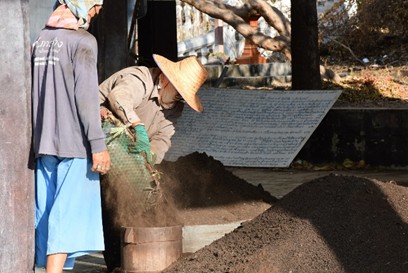
Background: It has been a long tradition for people to collect the Bat Guano from bat caves, which is then used all over the world as nutrient heavy fertilizer. Entering the caves creates a proximity between the animals and the workers and increases the risk for zoonotic spillovers as bats host a large reservoir of potential pathogens.
Activities: The project worked with local health and forestry authorities, industry, and religious partners to pilot and evaluate zoonotic risk mitigation interventions among bat guano workers.
Outcome: The outcome is the adoption of handwashing with water and soap among workers and the sustainable supply of soap on site provided by local business owners. The implementation of wearing N95 protective masks was more difficult, since the masks are physically uncomfortable with the humidity and high temperature at work.
Learnings: This is a great example of behaviour change interventions that mitigate the risk of zoonotic diseases while sustainably supporting bat conservation and income for the communities. The bat guano workers and business owners were very open to learning about the new implications and turning them into reality and they were also open for discussions of future initiatives. During this process, other health and safety issues were also discovered that lead to cooperation with the local clinic.
 
Products:  
Three community engaging and educational books targeting the public and communities, as well as One Health practitioners. 
Living with Wildlife through One Health
One Health in the Wildlife Trade
Living Safely with Bats – EcoHealth Alliance

A study report targeting policy stakeholders Understanding Wildlife Farming and Zoonotic Disease Management in Viet Nam
Four manuscripts for peer-reviewed journals targeting scientific communities.  
A workshop and webinar among the Alliance members and beyond. 
Three oral presentations at the 8th World One Health Congress targeting One Health researchers, practitioners, and policy stakeholders.

Overall Outcomes:
Empowering Local Communities: Engaged over 70 bat guano workers and community leaders, integrating their knowledge into health and conservation strategies.
Strengthening Collaboration: Facilitated dialogue among 58 cross-sectoral stakeholders, resulting in actionable plans for sustainable farming and One Health initiatives.
Raising Awareness: Delivered accessible One Health educational tools to audiences in more than nine Asian countries through a volunteer network, boosting understanding of zoonotic risks
Ensuring Sustainability: Secured funding from National Geographic Society and Novo Nordisk Foundation to support long-term, tailored disease risk reduction strategies in wildlife trade.
 
The project had a wide impact on the local communities, national policy stakeholders and other institutions widely involved in wildlife trade, specifically through fostering knowledge exchange and collaboration for safer work and living spaces close to wildlife.
 
Find more information and the overall learnings of the Alliance financed projects in the report “Learning to make Change Happen.- Global Lessons from 18 projects

Next Generation One Health Philippines: Building national capacity for transdisciplinary and translational research and advocacy for wildlife conservation and zoonotic spill over prevention in the next 50 years

The Philippines rank among the top biodiversity hotspots globally, with an estimated 20,000 plant and animal species unique to the archipelago. Yet, growing human pressure on ecosystems is forcing wildlife into closer contact with people. As natural habitats shrink, the risk of zoonotic disease spillover increases: a dynamic that plays a critical role in the potential emergence of future pandemics. 

This project aimed to enhance the domestic capacity of the Philippines for One Health transdisciplinary research and knowledge translation to effectively tackle wildlife trade and biodiversity loss as drivers of infectious disease emergence, with the purpose of preventing future zoonotic spillovers in the next 50 years. This program comprised a small cohort of fifteen professionals from diverse sociocultural and interdisciplinary backgrounds related to One Health, wildlife conservation, and zoonotic spillover prevention.  

Main Outcome:  

  • The fellowship spanned one year, starting with an online course and followed by training in collaborative research, leadership, advocacy, and communication. 
  • With mentorship and small grants, fellows conducted transdisciplinary research on wildlife trade and zoonotic spillover prevention. 
  • Fellows engaged in One Health dialogues to share findings and connect with key stakeholders. 
  • The cohort’s diversity in geography, gender, culture, and discipline enriched learning and collaboration. 
  • Covering the full knowledge cycle, the fellowship nurtures future One Health leaders: scientists, educators, and advocates. 

Products: 

Find more information and the overall learnings of the Alliance financed projects in the report “Learning to make Change Happen.- Global Lessons from 18 projects” 
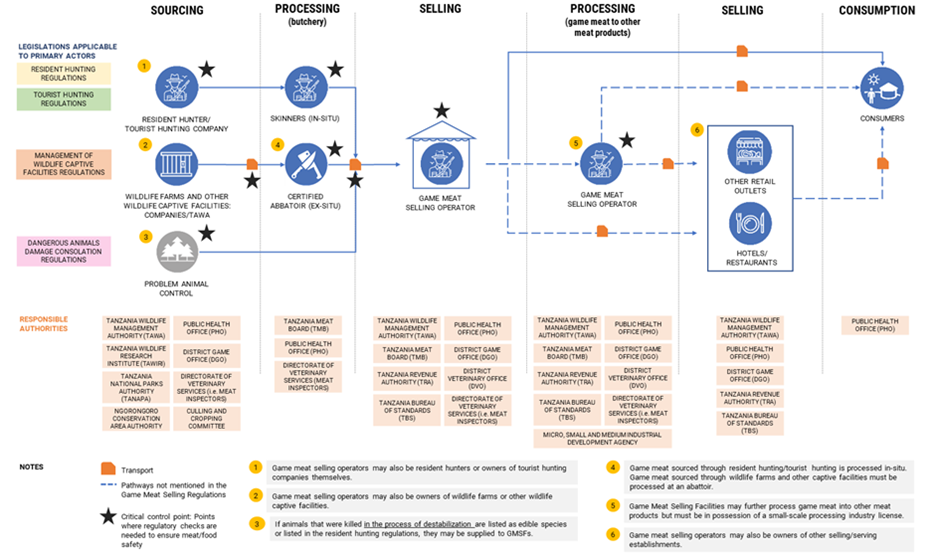
Reducing Risks in Tanzania’s Game Meat Industry: Developing a One Health Model for Safe, Sustainable and Legal Supply

Wild meat has been an important food source and cultural practice in Tanzania for generations.  This project is framed by Tanzania’s Game Meat Selling Regulations, which, when fast-tracked into law by Presidential decree in 2020, presented both threats and opportunities to manage a legal supply of wild animal meat (i.e., game meat, as distinguished from illegal ‘bushmeat’) for the domestic market.

TRAFFIC worked with the Tanzanian Wildlife Management Authority and other government departments and research institutions, as well as private sector and civil society actors. The project has developed a bespoke approach which incorporates One Health concerns together with insights from trade chain analysis to identify critical control points for mitigation of potential zoonotic disease risks and ensure that the game meat industry develops in a safe, legal and sustainable direction.

The Tanzania focus provided a valuable opportunity to develop a specific risk-management approach which has government support from the outset. This project gathered qualitative and quantitative data to understand potential disease and spillover risks via a wildlife disease risk analysis. In developing recommendations for risk management, the project was also considering the importance of livelihoods and socio-economic motivations, traceability and compliance with supply chain management protocols by priority stakeholders.

Main results:

  1. A Game Meat Value Chain Analysis was done and recommendations for managing the game meat supply chain have been consistently provided to relevant government agencies. Through that, an analyses report was written and a species database created.
  2. A Disease Risk Analysis was conducted. This showed an improved understanding of potential risks of zoonotic diseases among government agencies and other supply chain actors. Furthermore, risk reduction measures were identified that could potentially reduce associated disease risk.
  3. The newly proposed meat inspection regulations established a legal framework enabling appointed meat inspectors to assess game meat before it is distributed for retail sale through registered game meat selling facilities across Tanzania. 

Further opportunities for dissemination and sharing of project insights are being pursued beyond the life of the project. 

Outcome:

The project successfully engaged over 2 million individuals through awareness campaigns and training programs. In addition, the One Health collaboration tackled critical risks within the game meat value chain by implementing a systems-based management reform, led by the national Game Meat Selling Advisory Committee. Key achievements included the revision of meat inspection regulations to encompass wild animal meat, ensuring compliance prior to sale through registered game meat selling facilities. The current situation of the game meat industry is now much more understood, and multi-sectoral partners from district level up to national policy makers are now engaged to support the Tanzania Wildlife Management Authority (TAWA), mandated to manage the game meat selling industry, as the lead agency.

Products:

The results were disseminated to global partners and there was Radio, print and online communications and outreach, in both English and Swahili languages. 

Project report by TRAFFIC from June 2024 From Bush to Butchery: THE GAME MEAT VALUE CHAIN IN NORTHERN TANZANIA – Wildlife Trade Report from TRAFFIC

Voices from the Ground: Reducing Risks in Tanzania’s Game Meat Industry – International Alliance against Health Risks in Wildlife Trade

Article on Zoonosis day: Current Zoonotic Diseases Challenges In The East Africa Region – Wildlife Trade News from TRAFFIC

Find more information and the overall learnings of the Alliance financed projects in the report “Learning to make Change Happen.- Global Lessons from 18 projects